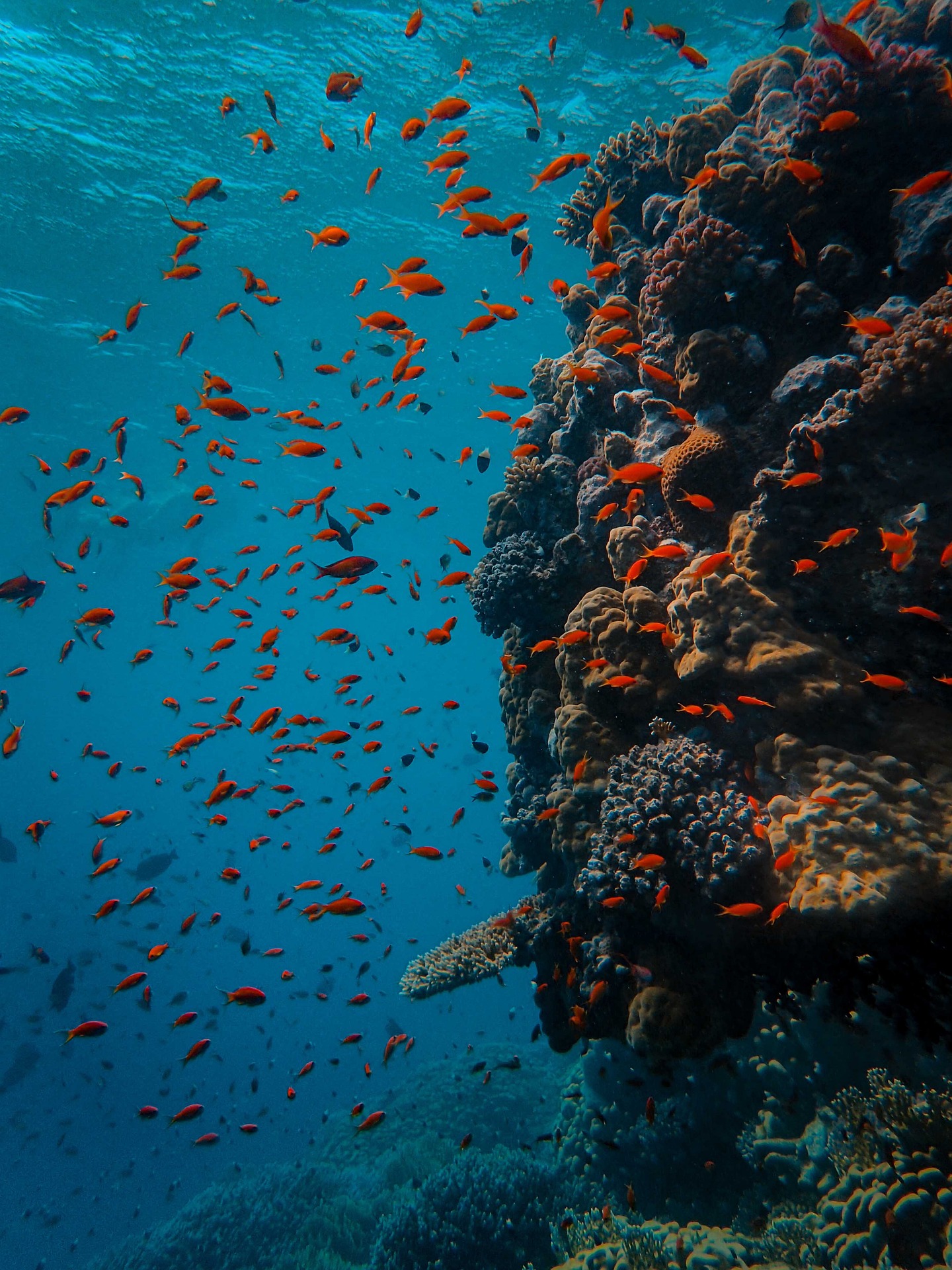
Marine life includes an extraordinary range of organisms that inhabit the oceans, from microscopic plankton drifting near the surface to the largest animals on Earth, such as whales and sharks. These species are incredibly diverse not only in size, but also in shape, behavior, and biological function. Over millions of years, they have evolved specialized adaptations that allow them to survive in some of the most extreme environments on the planet, including sunlit coral reefs, freezing polar waters, oxygen-poor deep seas, and nutrient-rich coastal zones.
Each marine habitat presents unique environmental pressures. In coral reefs, for example, intense competition for space and resources has led to the evolution of bright colors, symbiotic relationships, and complex communication systems. In contrast, deep-sea environments are characterized by complete darkness, extreme pressure, and scarce food resources, leading to unusual adaptations such as bioluminescence, slow metabolism, and highly sensitive sensory organs.
Despite these differences, all marine organisms are connected through intricate ecosystems and food webs. Energy in the ocean flows through these systems starting with primary producers like phytoplankton, which use sunlight to generate energy through photosynthesis. These microscopic organisms form the foundation of the marine food chain and support a vast number of species, including small fish, which are then consumed by larger predators.
Even seemingly insignificant organisms play crucial roles in maintaining ecological balance. Plankton, for instance, not only serve as a food source but also contribute significantly to global oxygen production and carbon cycling. Larger species such as whales influence nutrient distribution in the ocean through their movement and feeding behavior, a process sometimes referred to as the “whale pump.”
- Sharks and Rays: Cartilaginous fish that include apex predators like sharks and flat-bodied rays, both essential for maintaining ocean balance.
- Jellyfish: Gelatinous animals that drift with ocean currents and use stinging cells to capture prey.
- Cephalopods: Intelligent marine animals such as squids, octopuses, and cuttlefish, known for advanced problem-solving and camouflage abilities.
- Sea Anemones: Soft-bodied organisms related to corals that use stinging tentacles to catch prey and often live in symbiosis with other species.
- Marine Worms: A diverse group including polychaetes and flatworms that live in sediments and play key roles in nutrient recycling.
- Seaweeds (Algae): Photosynthetic organisms that provide oxygen, food, and habitat, including kelp forests that support entire ecosystems.
- Bioluminescent Organisms: Species such as certain fish, jellyfish, and plankton that produce light through chemical reactions for communication or defense.
- Filter Feeders: Animals like whales, sponges, and some shellfish that feed by filtering small particles from seawater.
- Deep-Sea Creatures: Organisms adapted to extreme pressure and darkness, often featuring unusual shapes, large mouths, and glowing organs.
- Seabirds (Marine-Dependent): Birds such as albatrosses and gulls that rely on the ocean for feeding and spend much of their lives at sea.
Understanding marine life and its ecosystems is essential not only for scientific knowledge but also for conservation efforts. Protecting the oceans means preserving biodiversity, maintaining climate balance, and ensuring the survival of countless species that depend on marine environments—including humans, who rely on the ocean for food, oxygen, and global environmental stability.
| Animal | Habitat | Diet | Fun Fact |
|---|---|---|---|
| Shark | Open Ocean | Carnivore | Sharks have an extremely strong sense of smell and can detect tiny amounts of blood from far away. |
| Octopus | Ocean Floor | Carnivore | Octopuses are highly intelligent and can change both color and texture to camouflage and escape predators. |
| Sea Turtle | Coastal Waters | Omnivore | Sea turtles can travel thousands of kilometers and often return to the same beach where they were born. |
| Dolphin | Coastal & Open Ocean | Carnivore | Dolphins are very social animals and communicate using sounds, clicks, and body movements. |
Marine life is essential to the health of our planet and plays a fundamental role in maintaining the balance of ocean ecosystems. Every organism, from the smallest plankton to the largest marine mammals, contributes to a complex and interconnected system that supports life in the oceans. These ecosystems not only provide food and resources but also help regulate the Earth's climate and produce oxygen. However, marine life is increasingly under threat due to pollution, climate change, and human activities. The loss of even a single species can have significant effects on the entire ecosystem. By studying and understanding marine life, we can better appreciate its importance and take action to protect it. Preserving marine biodiversity is not only vital for the ocean but also for the future of all life on Earth.